 Concept render
Ring
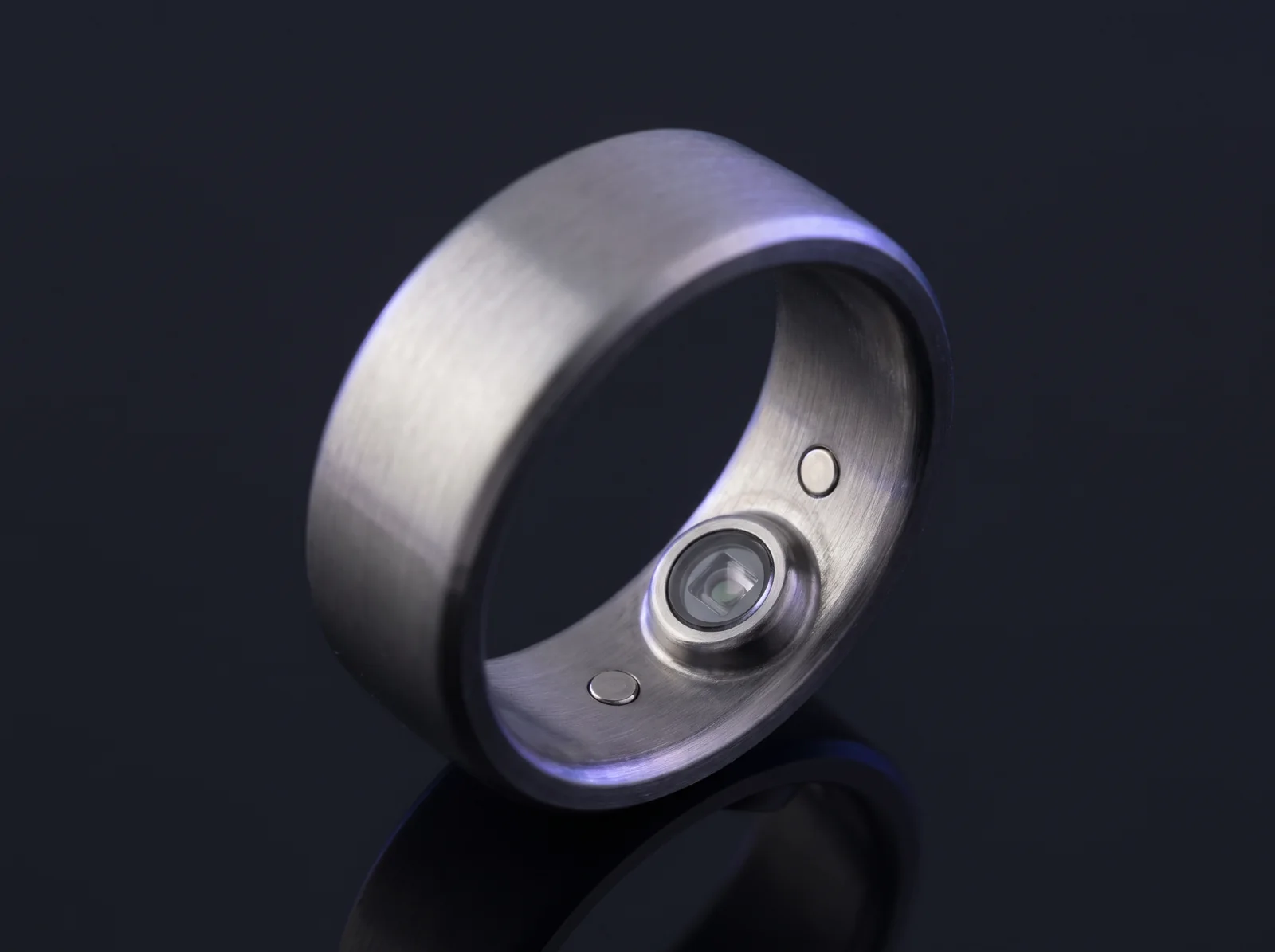
Smart ring
Sleep, recovery and readiness from the finger, where the optical signal is strong at night. The hard parts are a battery in a thin band of metal and a fit that holds across sizes.

We design and build smart rings, screenless bands and health watches for AI health, fitness and sleep companies. PPG, SpO2, skin temperature and motion sensing, a battery sized for real use, raw data for your algorithm team, and health data that goes only to your cloud.
 Concept render
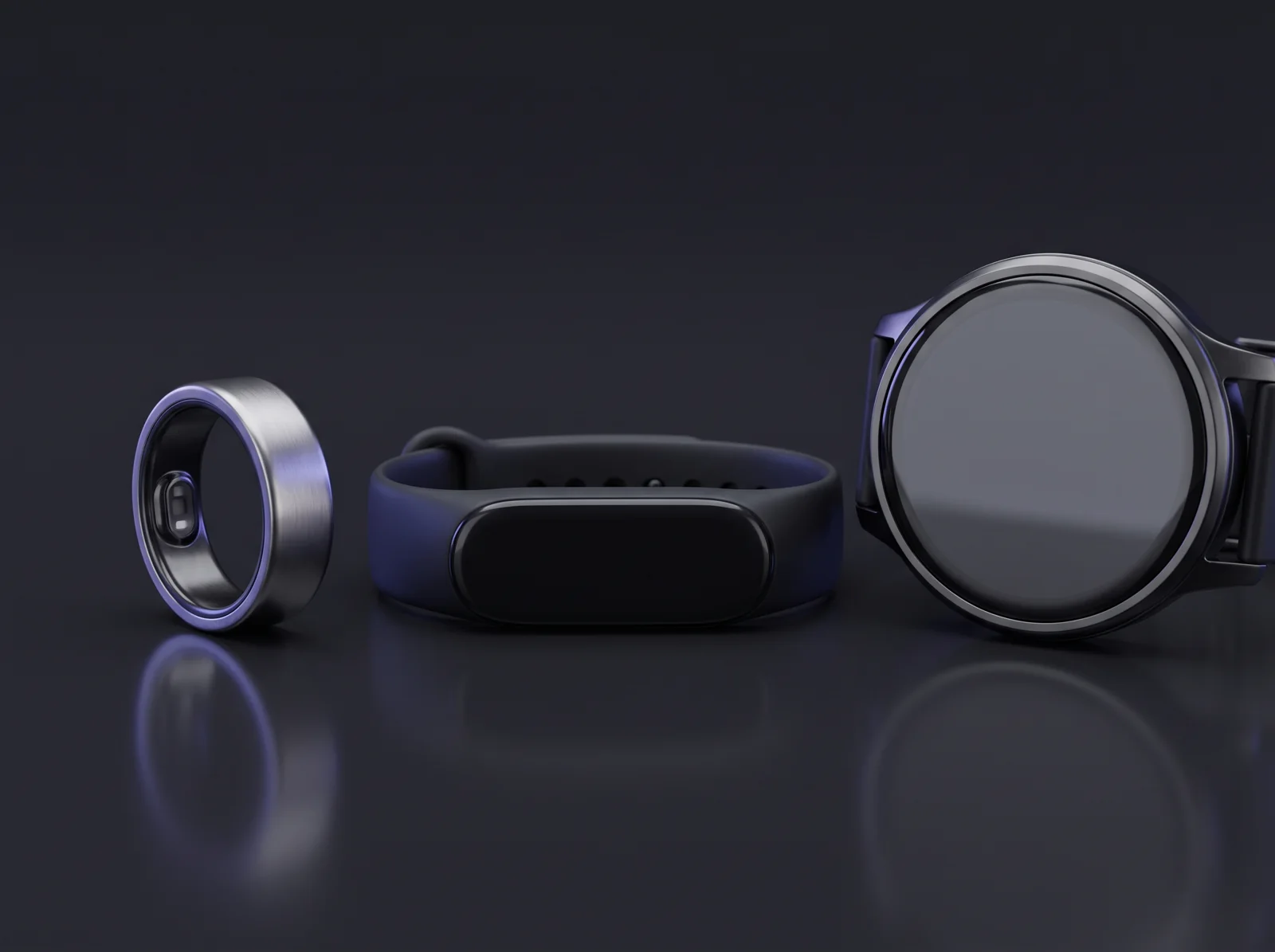
The body location decides signal quality, battery size and how long people keep wearing it. Pick it with your algorithm team, not after.
Concept renderSleep, recovery and readiness from the finger, where the optical signal is strong at night. The hard parts are a battery in a thin band of metal and a fit that holds across sizes.
 Concept render
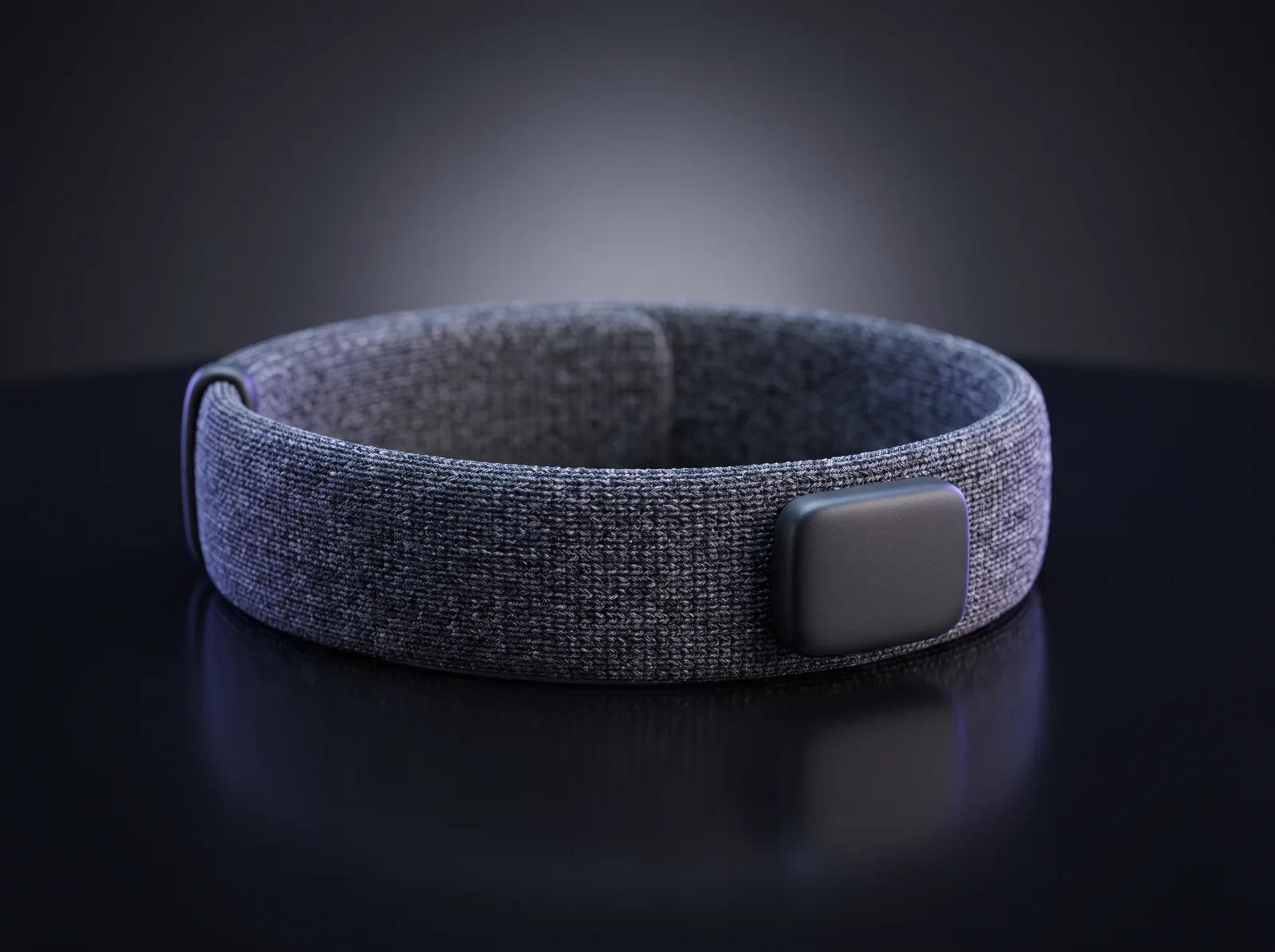
A sensor pod on a soft strap, worn day and night. No display means more room for battery and a lower price. Everything the user sees lives in your app.
 Concept render
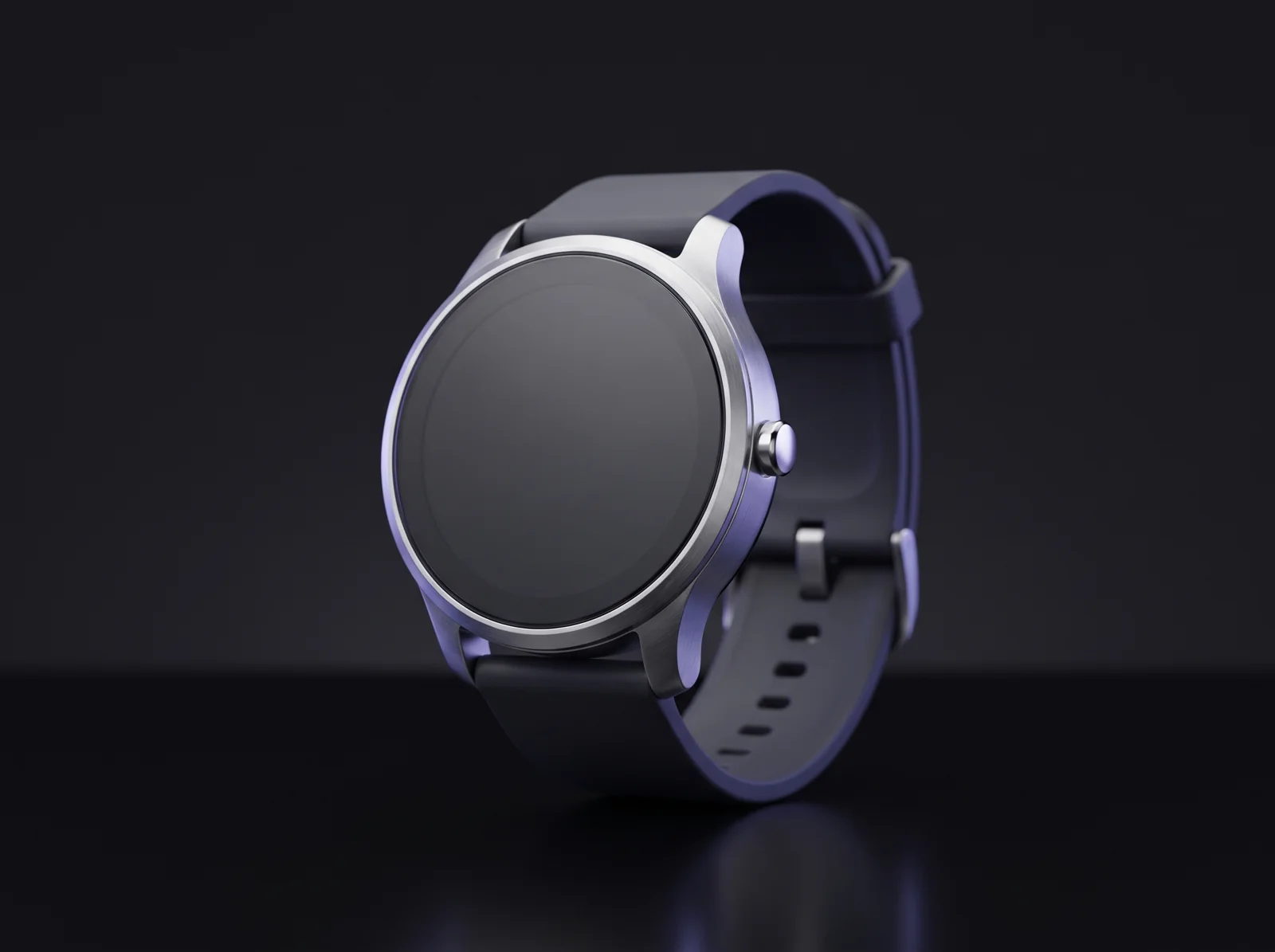
A display for live heart rate, workouts and nudges without opening the phone. More power budget for the screen, and a larger enclosure to place the optical stack.
A small sensor pod that clips to a waistband or sits in a reusable holder. Useful when the signal you need is motion or posture, not the wrist.
Heart-rate strap for training products that need a cleaner signal during hard exercise than the wrist can give.
Soft fabric band for sleep and relaxation products. Comfort on a pillow drives the mechanical design as much as the electronics.
A health wearable is five systems that must agree on timestamps, sample rates and what happens when data goes missing. We build the first four and test against the fifth.
PPG LEDs and photodiodes, an IMU and a skin temperature sensor, placed and sealed in the real housing so the signal holds up on a moving wrist or finger.
Sampling schedules, on-device buffering, optional on-device features such as heart rate or step count, encryption and signed OTA.
Bluetooth LE to the phone in batches, with resume on reconnect and no gaps in the night when the phone is out of range.
Optional. Pairing, sync, device settings and a data API, deployed in your own cloud account.
Your sleep staging, HRV, recovery and readiness models. We deliver the raw and processed data in the format your team expects.
Our Shenzhen team has developed PCBA and firmware for smart rings and smart watches: Bluetooth LE, low-power design on Ambiq Apollo and Nordic SoCs, and wearable-size boards. Client names withheld.
Project specs, layouts and test data are shared on a call after a mutual NDA, where the client permits.
Rings, bands and watches share the same blocks. The choices inside each block decide signal quality, runtime and size.
| Block | For example | Why it matters |
|---|---|---|
| SoC | Nordic nRF54L or nRF5340 series; Ambiq Apollo series where runtime matters most | Most of the power budget is spent here. Sleep current and sampling schedules decide whether you get days or a week. |
| Optical front end | Analog Devices MAX86141 or ADPD4100 class AFE, with green, red and infrared LEDs and one or more photodiodes | Green light for heart rate and HRV; red and infrared for SpO2 estimates. LED-to-photodiode spacing and light blocking matter as much as the chip. |
| Motion | Bosch BMI270 or ST LSM6DSO class IMU | Activity and sleep detection, and the motion reference used to clean up the optical signal. |
| Temperature | Digital skin temperature sensor, for example TI TMP117 class | Night-to-night trends depend on thermal contact with the skin and on keeping the sensor away from the charger and SoC heat. |
| Power | Small Li-ion cell (curved for rings), a PMIC such as Nordic nPM1300 or TI BQ25120A, fuel gauge | Charging contacts or a magnetic dock for open designs; wireless charging when the housing must stay sealed. |
| App & cloud | Your app and backend, or an app and backend we build in your cloud account | By default we deliver the device protocol and SDK and test against your endpoint; app and backend are an option. |
Part names are examples only. Final selection happens at Gate 0 against your sensing, runtime, size and cost requirements.
Your models are only as good as the signal. Most health wearables fail on the optical stack, the fit or the battery. We work on all three from the first prototype.
A Bluetooth-only wellness wearable has a light radio path. The harder questions are your health claims and your users' health data. We map both at Gate 0 and file radio certifications in your company's name.
| Requirement | When it applies | What it means for you |
|---|---|---|
| FCC Part 15 Subpart C (§15.247) | Bluetooth LE transmitter | A ring often has no room for a pre-certified module, so plan for intentional-radiator testing on the final design. Bands and watches sometimes can use a module. |
| FCC Part 15 Subpart B | Every device with digital circuitry | Unintentional emissions. Still required when the radio module is pre-certified. |
| RF exposure (47 CFR §1.1307, §2.1093) | Worn against the body | Low-power Bluetooth LE often qualifies for an exemption. The lab confirms which applies to your design. |
| UN38.3 + 49 CFR §173.185 | Any lithium cell shipped with or in the device | Shippers and Amazon ask for the test summary. Plan it with the cell supplier at Gate 2. |
| IEC 62133-2 | Rechargeable cell and pack safety | Not a federal requirement, but many retailers ask for it. A cell that sits against skin all night deserves the test anyway. |
| FDA general wellness policy | Every health-related claim on the box, the app and your ads | FDA reissued its general wellness guidance on January 6, 2026. It allows non-invasive wellness products to estimate values such as heart rate variability or oxygen saturation, within limits. See the next section. |
| FTC Health Breach Notification Rule (16 CFR Part 318) | Health apps and connected devices not covered by HIPAA | A breach includes sharing health data without the user’s authorization, as well as a hack. Users must be notified within 60 calendar days of discovery. |
| Washington My Health My Data Act (RCW 19.373) | Consumer health data from Washington consumers | Covers data on bodily functions, vital signs and measurements. Collection needs consent for a specified purpose; sharing needs a separate consent. Enforced under the state Consumer Protection Act. |
| Illinois BIPA (740 ILCS 14) | Only if the product uses a biometric identifier | The Act lists retina or iris scans, fingerprints, voiceprints and scans of hand or face geometry. Relevant if you add fingerprint unlock or voice ID, for example. |
Rules as of October 2026. This is a planning summary, not legal advice. Primary sources: 47 CFR Part 15, 47 CFR §2.1093, 49 CFR §173.185, FDA general wellness guidance, FTC Health Breach Notification Rule, RCW 19.373, 740 ILCS 14. Lab and certification fees are paid by you; we manage the process. How we plan FCC work.
FDA's guidance looks at your labeling, advertising, user interface and functionality, not only the hardware. The same ring can be a wellness product or a medical device depending on what you say it does. Summary of the January 6, 2026 guidance, which superseded the 2019 version:
| Category | Examples from the guidance |
|---|---|
| Usually inside general wellness | Sleep tracking and sleep trends; physical fitness and activity; stress, relaxation and recovery; heart rate during exercise; values, ranges, trends and baselines shown in a wellness context. |
| Moves the product toward device regulation | Naming a specific disease, clinical condition or diagnostic threshold; alerts that recommend clinical action; treatment guidance; claims of clinical accuracy, "medical grade" or equivalence to a cleared device; an intended use of screening, diagnosis or monitoring of a disease. |
| Allowed with care | A notice that a healthcare professional may be helpful when readings fall outside wellness ranges, if it names no disease, does not call the reading abnormal, and gives no clinical thresholds. |
| Needs validation | Values that look like clinical values, such as SpO2 or blood pressure, should be validated, for example by manufacturer testing or peer-reviewed literature. |
Your regulatory counsel confirms your intended-use claims. We keep the firmware, the app copy and the validation data consistent with what counsel approves, and we can keep the hardware compatible with a later medical filing if you plan one.
Health wearables need data from real bodies before the design is frozen. The gates are built so your algorithm team gets that data early.
Every unit off the line goes through a production test we write with you:
Heart rate, sleep and temperature data is health data under laws like Washington's My Health My Data Act. The device is designed so that only you can read it.
Possibly. FDA’s general wellness guidance, reissued on January 6, 2026, says non-invasive products that estimate values such as oxygen saturation or heart rate variability may be general wellness products when the outputs are for wellness use only and clinical-looking values are validated. Your regulatory counsel confirms based on your intended-use claims. We keep the claims, the app copy and the validation data consistent.
It depends on battery size, sampling rates and how often the radio syncs. A week between charges is a common design target for rings, not a promise. We measure real current draw per mode on the Gate 1 prototype and show you the trade-offs before the enclosure size is fixed.
Yes. We build a raw-data mode that streams or logs PPG channels, accelerometer and temperature with shared timestamps and documented sample rates, plus export tools. Your team trains and tests on data from the actual housing, not a dev kit.
Either. Simple features such as heart rate or step count often run on the device to save radio power. Sleep staging and recovery scores usually run in your app or your cloud. We can port a model to the device if it fits the memory and power budget, and we leave the model itself with you.
Yes, as an option. We build the iOS and Android app for pairing, sync and settings, and a data backend deployed in your own cloud account. Your algorithms stay with you. App, cloud and AI.
Yes. Our Shenzhen team has developed PCBA and firmware for smart rings and smart watches on Bluetooth LE, including Ambiq Apollo and Nordic platforms. Client names are withheld.
Next step. Tell us about your form factor, the signals your algorithms need and your target pilot size. A Duobay engineer replies within 2 business days.
Tell us what the device must do. An engineer replies within 2 business days with questions, not a sales deck.