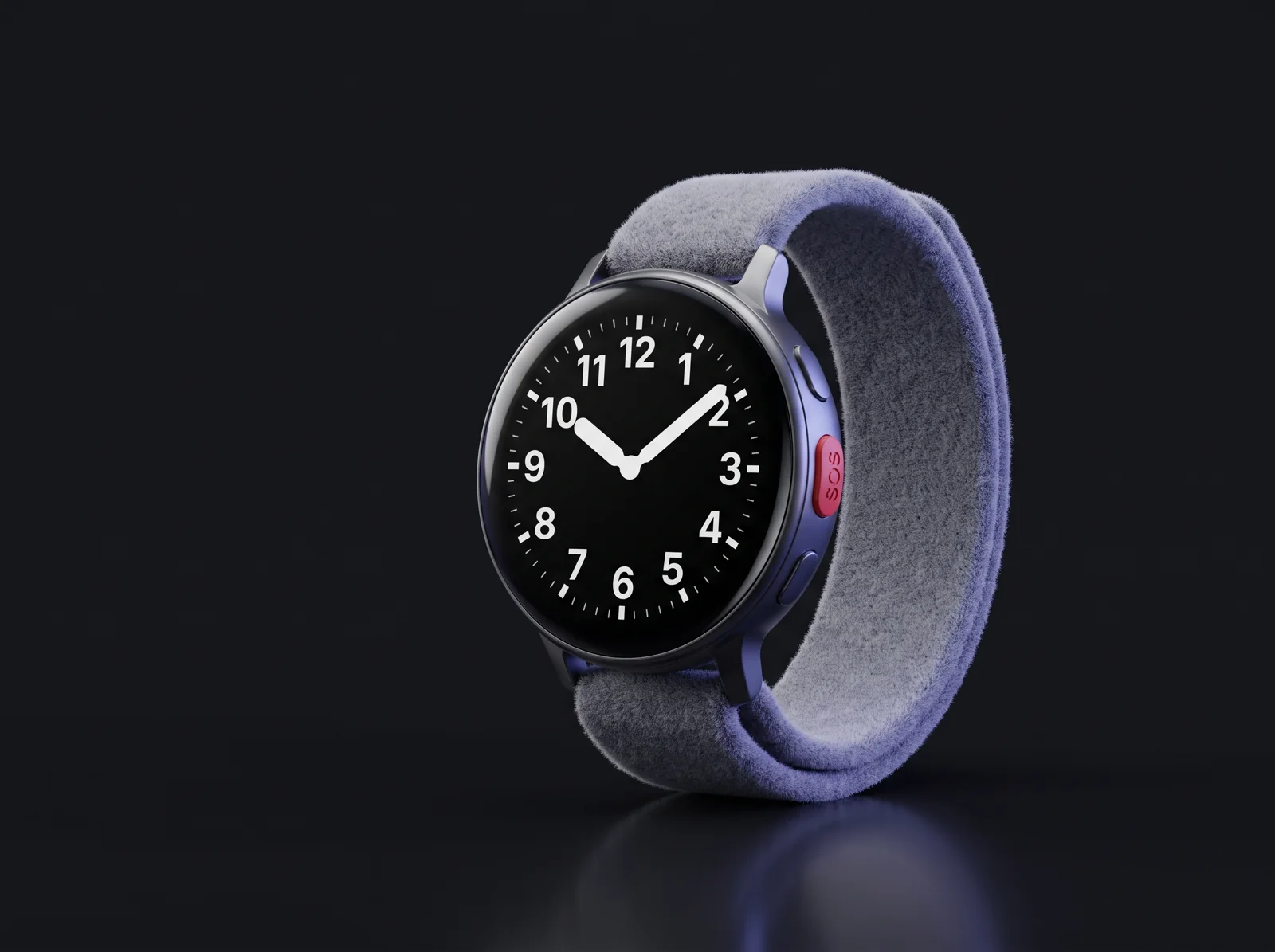
 Concept render
4G watch
Senior watch with SOS
A cellular watch with one large SOS button, fall alerts, location and two-way voice. It works away from home with no phone to pair.

We design and build 4G senior watches with SOS and fall alerts, check-in speakers and desk companions. Provisioned in the box, loud and clear, with core features that run offline and data that goes only to your cloud. We build for adults, older adults and teens 13 and up.
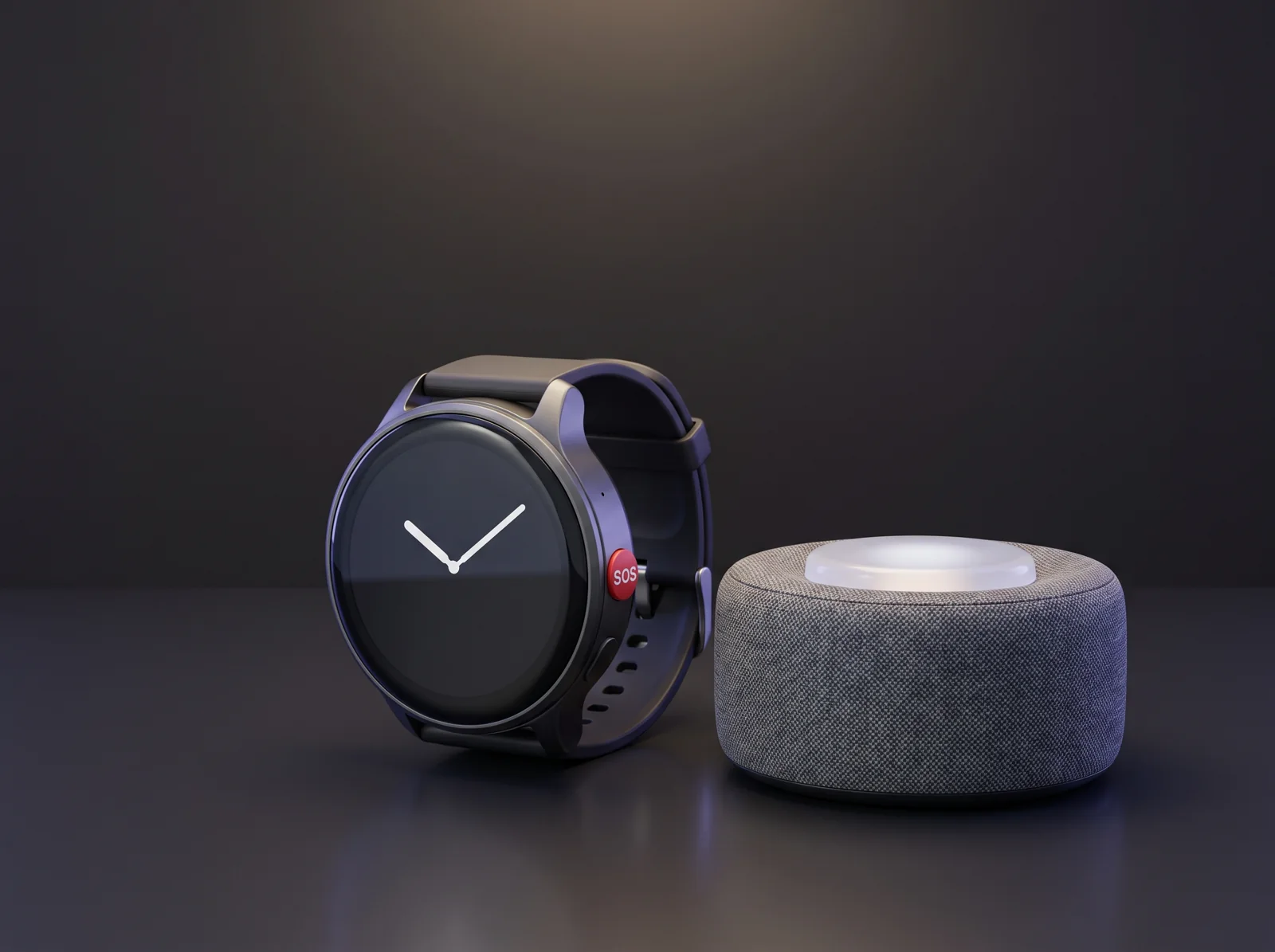 Concept render
These devices succeed when they fit a daily routine with no setup and no phone. Three common forms, and three more we can build.
Concept renderA cellular watch with one large SOS button, fall alerts, location and two-way voice. It works away from home with no phone to pair.
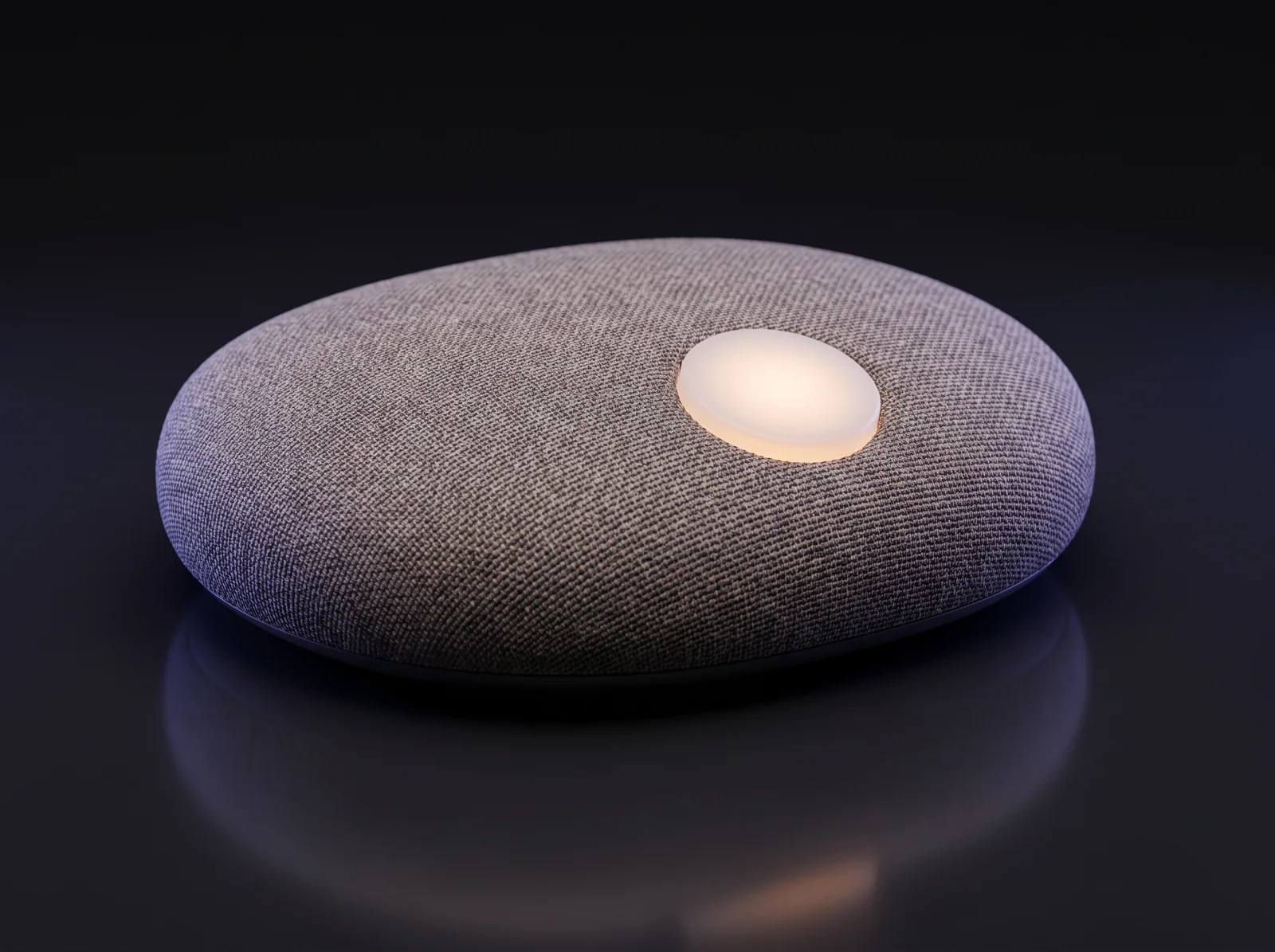 Concept render
Daily check-ins, medication and appointment reminders, and a one-press call to family. One big button, loud clear speech, nothing to set up.
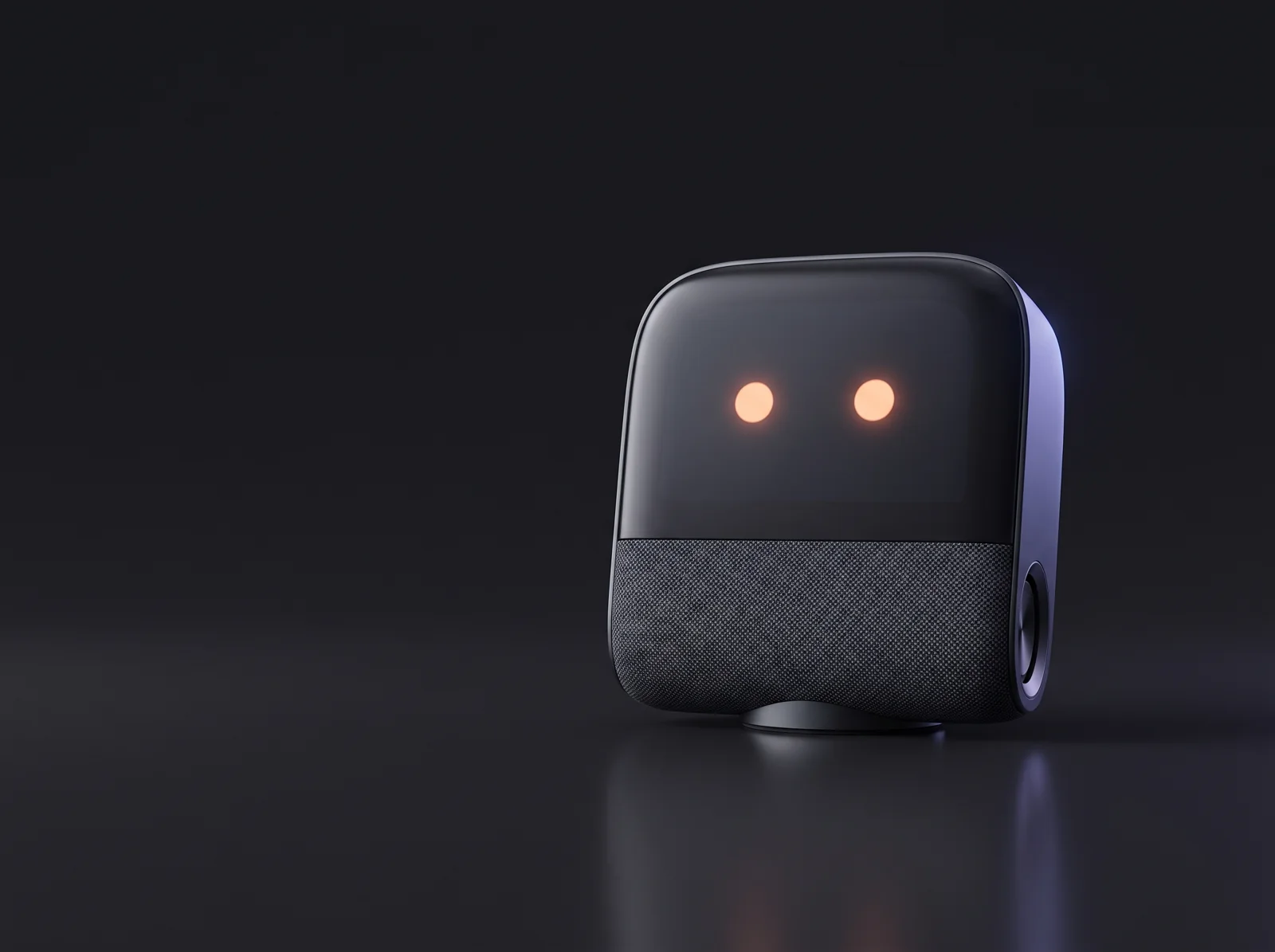 Concept render
A small screen, far-field mics and a speaker for a conversational companion, coach or assistant. Wake word runs on the device.
A single-button alert worn on a cord or belt for people who will not wear a watch. Bluetooth LE to a home hub, or LTE-M on its own.
A dock with lights, a speaker and a lid sensor that logs when a dose was taken and tells a caregiver when one was missed.
A night light, a call button and a motion sensor that report a normal morning, or no movement by a set time, to a caregiver.
The person wearing the watch is often not the person who buys it or sets it up. We design for both.
Devices they can use with no help, no app and no passwords. Large controls, clear speech and a button that always reaches someone.
A caregiver app for alerts, check-in status, reminders and settings, so the older adult never has to change anything on the device.
Fleets provisioned in bulk, alerts routed to staff or the monitoring service you contract, and update control at fleet level.
Desk and home companions for adults and teens aged 13 and up, with age gating and the safety features your counsel requires.
Who we do not build for. We do not build products for children under 13, and we do not build children's products of any kind. Teen-facing companions need age-appropriate design and safety features, which we scope with your counsel at Gate 0.
An elder care device is five systems that must agree on what happens when something goes wrong. We build the first four and test against the fifth.
Enclosure, buttons, mics, speaker, display, IMU, GNSS and battery, designed for hands and ears that are not young.
SOS and fall-alert state machine, offline features, wake word, reminders, signed OTA and a defined behavior for every failure.
LTE-M or Cat-1bis with your SIM, Wi-Fi and BLE. Provisioned in the box, so the user never joins a network.
Optional. Caregiver app, alert routing, device management and storage, deployed in your cloud account.
Your monitoring service, AI companion, care program or subscription. We test against your endpoint.
The watch is a cellular tracker with a voice path and a fall-alert trigger. The desk companion is a far-field voice device. The choices inside each block decide runtime, cost and what still works offline.
| Block | For example | Why it matters |
|---|---|---|
| Cellular | Cat-1bis such as the u-blox LEXI-R10 family, or LTE-M such as the Nordic nRF9151 with integrated GNSS | Two-way voice needs a module and firmware whose VoLTE is approved on your carrier. We confirm this at Gate 0. |
| Location | GNSS on the module or a separate receiver such as u-blox M10; Wi-Fi and cell-ID as indoor fallbacks | GNSS rarely works indoors, which is where most alerts happen |
| Motion | 6-axis IMU such as Bosch BMI270 or ST LSM6DSV, with on-chip motion detection | Triggers a fall alert prompt. The IMU wakes the MCU so standby stays low. |
| Button and haptics | One large SOS button with a long-press threshold, a vibration motor and a status LED | Must be easy to press on purpose and hard to press by accident |
| Audio | MEMS mic and a speaker sized for speech, with a sealed acoustic path | The wearer may be on the floor with the watch away from their ear |
| Power | Li-Po cell, PMIC and fuel gauge; magnetic or drop-in dock charging | Runtime depends on GNSS and voice use. We measure it on the Gate 1 prototype. |
| Block | For example | Why it matters |
|---|---|---|
| Application SoC | Espressif ESP32-S3, or ESP32-P4 paired with an ESP32-C6 for Wi-Fi 6 and BLE; a Linux SoC such as NXP i.MX 93 if more must run locally | Decides which features still work with no network at all |
| Audio input | 2–4 MEMS mics with acoustic echo cancellation, for example an XMOS XVF3800 voice processor or AEC on the SoC | Older adults often speak softly and from across the room, with a TV on |
| Audio output | Class-D amplifier and a speaker in a tuned enclosure, sized for clear speech | Speech clarity matters more than music quality for this group |
| Display and controls | Small LCD with large type, physical buttons, and a mute switch that cuts mic power | People must see when it is listening and be able to stop it by hand |
| Connectivity | Wi-Fi and BLE; optional LTE Cat-1bis for homes without broadband | An LTE variant adds the cellular certification path |
| Cloud | Your LLM and voice backend, reached through an endpoint set in signed configuration | The device must keep working if that backend changes or goes away |
Part names are examples only. Final selection happens at Gate 0 against your runtime, size, cost, carrier and module-origin requirements.
Many older adults have arthritis, hearing loss or low vision, and no interest in another app. Most of the design work goes into removing steps.
One SOS button, a few large keys, high-contrast type and a screen that never needs a swipe to reach an alert.
Speaker and enclosure tuned for intelligibility, a wide volume range for users with hearing loss, and prompts that repeat.
SIM active, contacts and settings loaded before shipping. The user takes it out, charges it and it works.
Contacts, reminders, check-in times and alert routing are set by a caregiver, with the user told on the device when something changes.
A magnetic or drop-in dock instead of a small plug, a charge level shown in words, and a reminder to charge before the battery runs low.
SOS to a stored contact over cellular, reminders, clock, alarms and the wake word all run if Wi-Fi drops or your backend is down.
In late 2024 a well-known companion robot lost almost all of its features when its maker closed, because every conversation depended on the maker's servers. Families who had built routines around it were left with a device that could not talk. We design so your users do not face that.
An SOS button and a fall alert send a message and open a voice call to family or to a monitoring service you contract. We do not claim medical-grade fall detection, and we do not claim a connection to emergency services unless your carrier setup supports it and you have confirmed it.
As of October 2026, FDA's general wellness guidance does not address fall alerts directly. Intended-use wording is set with your regulatory counsel.
A Wi-Fi speaker on a listed adapter has a short path. A cellular watch worn on the wrist has one of the longest. We map yours at Gate 0 and file in your company's name.
| Requirement | When it applies | How we handle it |
|---|---|---|
| FCC Part 15 Subparts B and C | Every device: unintentional emissions, plus Wi-Fi and Bluetooth transmitters | Pre-certified modules where they fit. The finished device still needs Part 15B testing. |
| FCC Parts 22, 24 and 27, PTCRB, carrier | The 4G watch and any LTE variant | Same path as our LTE trackers. Voice adds carrier VoLTE testing. Planned at Gate 0 with lab quotes. |
| RF exposure and SAR (47 CFR §2.1093) | Devices used within 20 cm of the body, such as a cellular watch or pendant | A body-worn cellular device usually needs SAR testing. A desk unit used at 20 cm or more is assessed as a mobile device instead. |
| 911 calls (47 CFR §9.10) | Only if the watch can dial 911 | The rule applies to the carrier that provides interconnected voice. We confirm 911 behavior with your carrier before any copy mentions it. |
| UN38.3 + 49 CFR §173.185 | Any lithium cell shipped with or in the device | Test summary from the cell supplier, planned at Gate 2. |
| Listed power adapter + DOE Level VI | Plug-in devices such as speakers, desk units and docks | We specify a listed external adapter that meets the federal Level VI efficiency standard, so the device has no mains stage of its own. |
| California SB 243 | Companion chatbots used in California, in effect since January 1, 2026 | Duties fall on the operator, usually you. The device must support a spoken and visible AI notice and a tested crisis-referral audio path. |
| COPPA (16 CFR Part 312) | Online services directed to children under 13 | Why we do not build products for children under 13. Voice recordings and street-level location of a child are personal information under the rule. |
Rules as of October 2026. This is engineering guidance, not legal advice. Primary sources: 47 CFR Part 15, 47 CFR §2.1093, 47 CFR §9.10, 49 CFR §173.185, 10 CFR §430.32, California SB 243, 16 CFR Part 312. Lab and certification fees are paid by you; we manage the process. How we plan FCC work.
These products are proven in daily use. Put real units with real older adults early, with one community or caregiver group, then tool up.
Every unit off the line goes through a production test we write with you:
These devices hear family life, know where someone is and when they fell. Only your systems should ever see that.
 Concept render
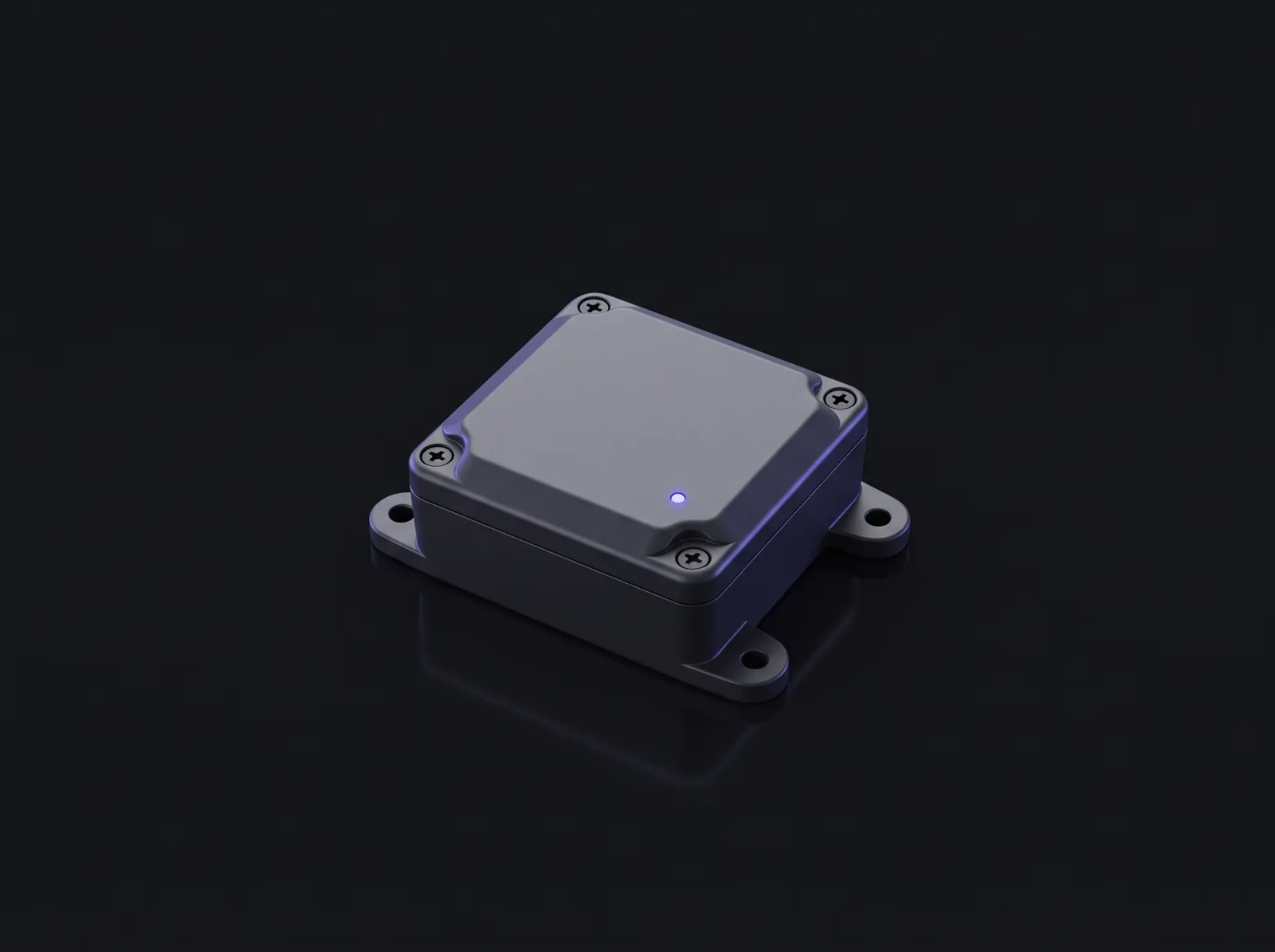
The cellular, location and power base a 4G senior watch builds on: LTE-M or Cat-1bis, GNSS, and firmware that reports to your server.
View design →COPPA, California SB 243, recording consent and RF exposure, and what each means for the hardware.
We design it as an alert to family or a monitoring service, and we do not describe it as medical-grade fall detection. Whether your product needs FDA review depends on your intended-use claims. FDA's general wellness guidance (January 2026) does not address fall alerts directly, so settle the wording with your regulatory counsel before marketing copy is written.
Only if your carrier and voice setup support it, and we confirm that before any copy mentions it. FCC 911 rules (47 CFR §9.10) apply to the carrier that provides interconnected voice service. By default the SOS button calls and alerts the contacts or monitoring service you set up.
No. We build for adults, older adults, and teens aged 13 and up for companion products. We do not take products directed to children under 13. The amended COPPA rule had a compliance date of April 22, 2026, and treats a child's voice recordings and location as personal information.
It depends on what the device does. SB 243 covers companion chatbots that sustain a relationship across interactions. A conversational companion likely falls inside it. Whether a reminder-only speaker does depends on its features, so your counsel should confirm.
They keep working in a reduced local mode. We design a local fallback, a cloud endpoint set by configuration, and an end-of-service firmware image that you build and keep on file with your own signing keys.
No. The watch has its own cellular connection, and speakers and desk units can have an LTE Cat-1bis variant for homes without broadband. A caregiver uses the phone app. The older adult does not need one.
Next step. Tell us who will use the device, who will set it up, who receives the alerts and what it must do with no network. A Duobay engineer replies within 2 business days.
Tell us what the device must do. An engineer replies within 2 business days with questions, not a sales deck.