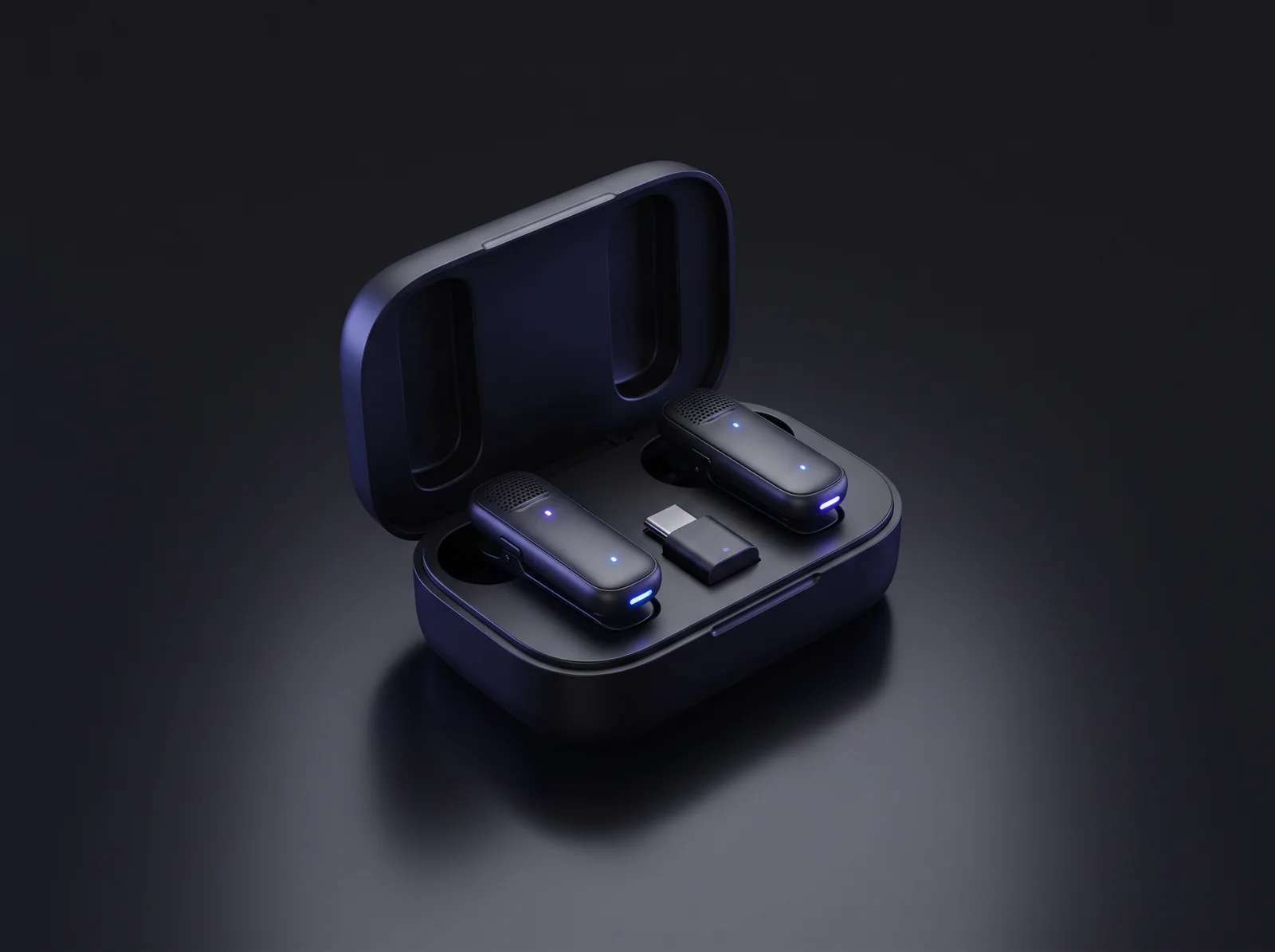
 Concept render
Wireless mic
Two-person wireless mic kit
Two clip-on transmitters and one receiver for interviews, podcasts and field recording. Each transmitter keeps a local copy in case the link drops.

We design and build wireless mic systems, mic-array devices, LE Audio and Auracast transmitters and on-device voice terminals. Clean capture, a link that holds up, consent built into the hardware, and audio that goes only to your cloud.
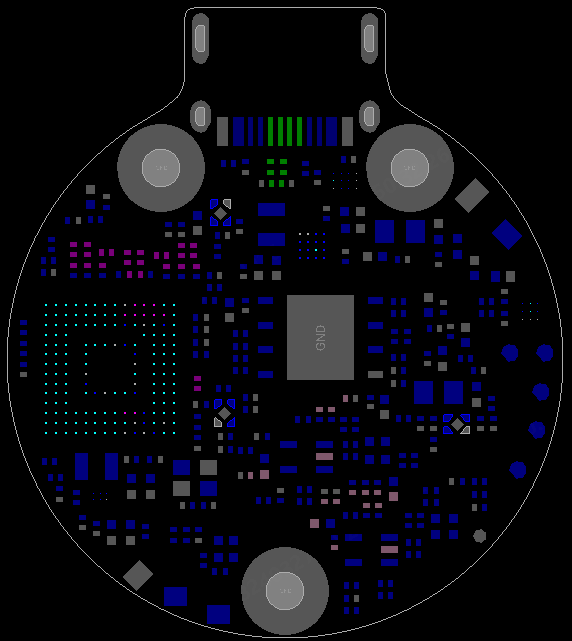 PCB layout
Speech models fail on bad input. A device built around your model gets cleaner audio than a phone or a laptop mic.
Concept renderTwo clip-on transmitters and one receiver for interviews, podcasts and field recording. Each transmitter keeps a local copy in case the link drops.
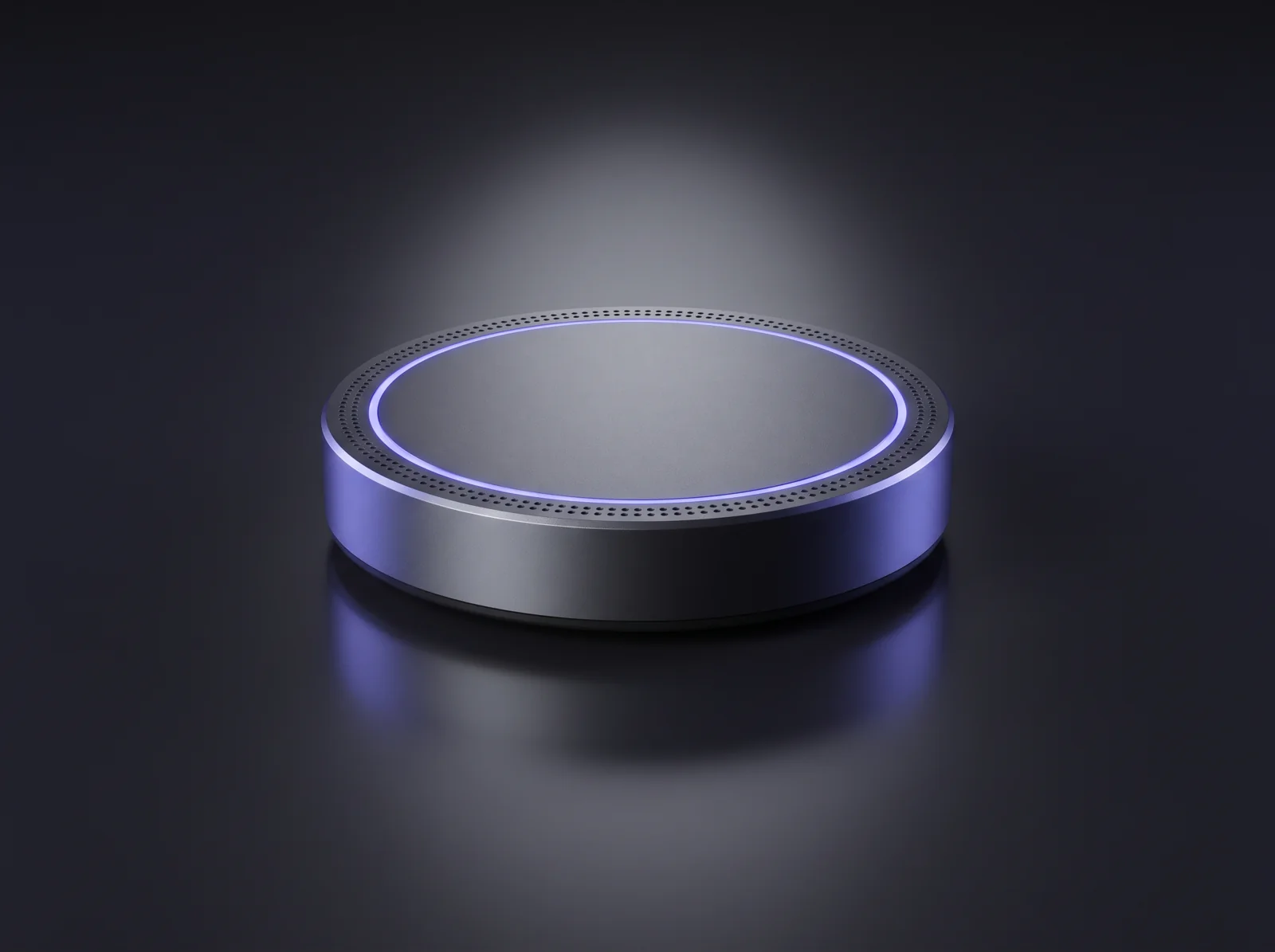 Concept render
A tabletop unit that picks up a whole room. Echo cancellation and beamforming decide whether the far end of the table gets transcribed.
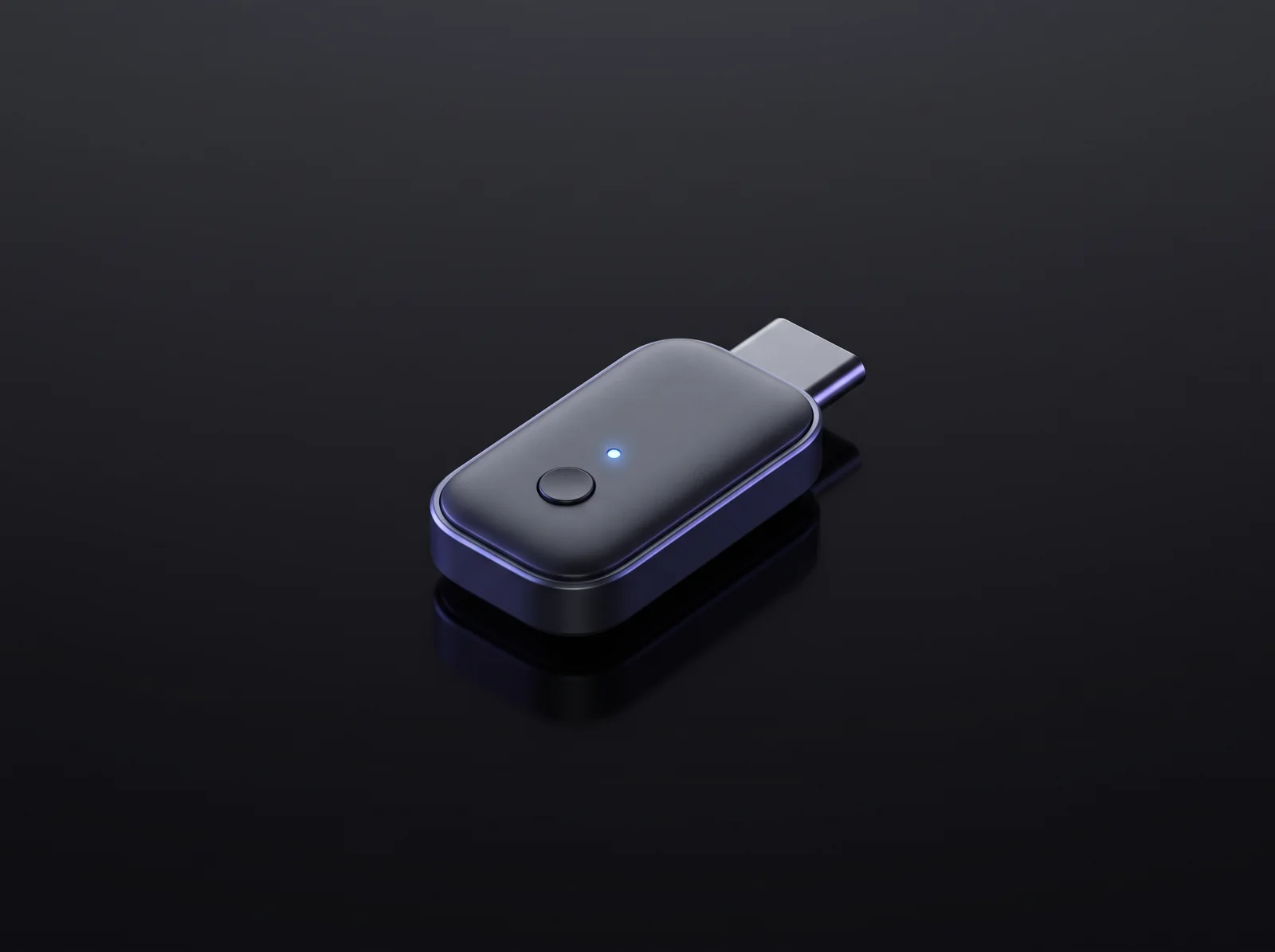 Concept render
Plugs into a laptop, console or PA system and shows up as a standard USB audio device. Streams to earbuds, or broadcasts to many listeners with Auracast.
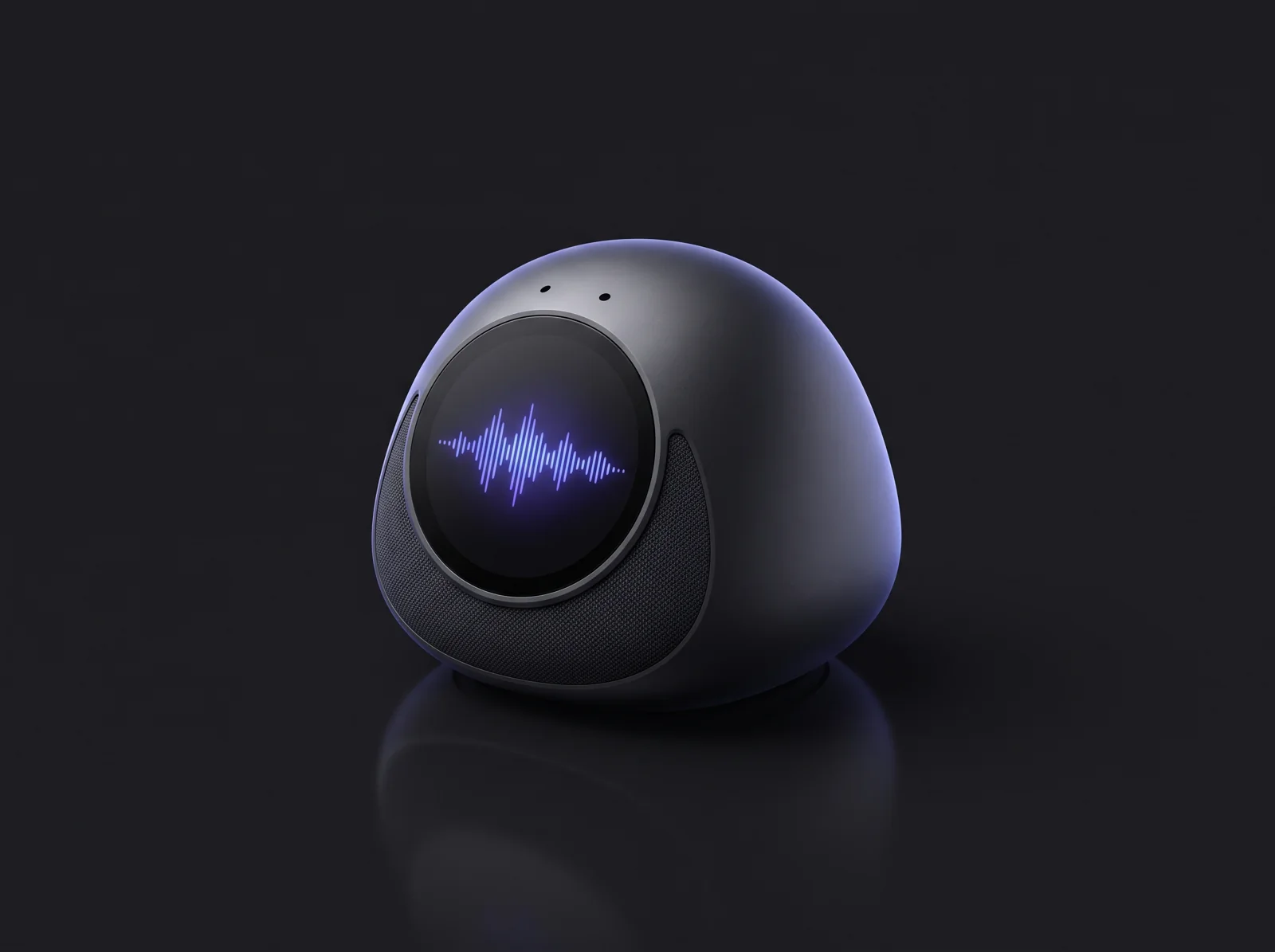 Concept render
A small speaker-and-mic device that hears its wake word locally and only then talks to your assistant. A mute switch and a light show when it listens.
An audio device is five layers. A mistake in the first one cannot be fixed in the last. We build the first four and test against the fifth.
Mic choice, port and gasket design, speaker chamber, and isolation between the speaker and the mics, tested in the real enclosure.
Echo cancellation, beamforming, noise suppression and gain control, tuned on recordings from your actual use case.
Opus, LC3, aptX, LDAC, AAC or uncompressed PCM, over 2.4 GHz, Bluetooth Classic, LE Audio, Wi-Fi or USB.
Firmware, signed OTA, pairing, settings and an SDK. App and backend in your cloud account are an option.
Your speech-to-text, voice assistant, translation or summaries. We deliver the audio your model expects and test against your endpoint.
Clip-on transmitters stream 2.4 GHz digital audio to a receiver and record to their own flash at the same time. If the wireless link drops, the local copy keeps the audio. Built by our Shenzhen team; client name withheld.
Figures are from the product's specification sheet. Range depends on environment.
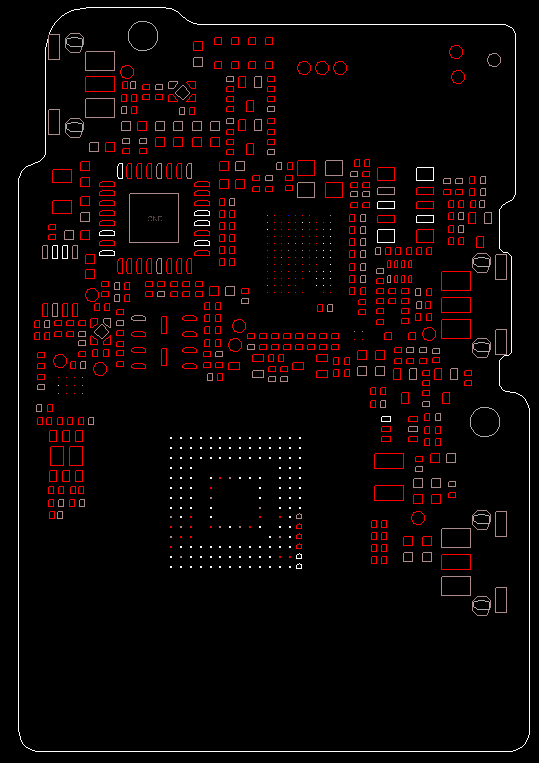 PCB layout
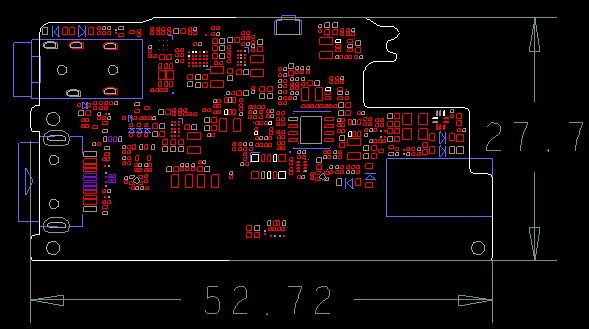 PCB layoutPCB layout
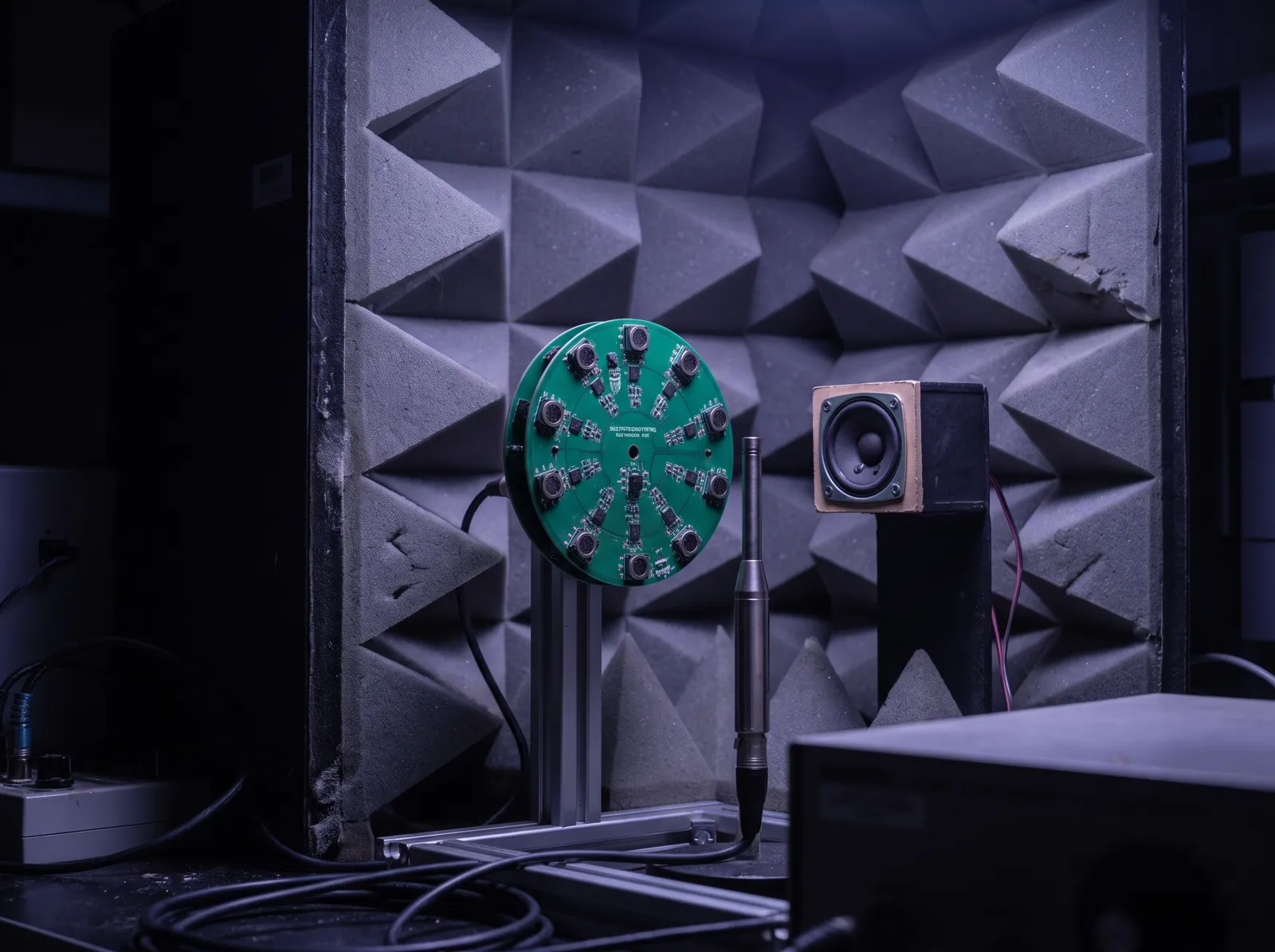
A multi-microphone array for far-field voice pickup, the starting point for meeting pucks and voice terminals.
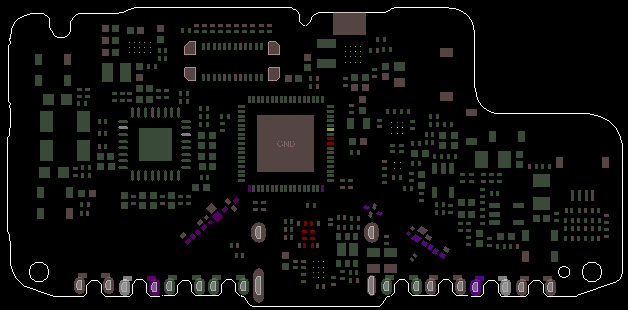 PCB layout
A long, narrow recording card with matched transmitter and receiver boards.
Platforms our team builds on: Qualcomm QCC30xx and QCC51xx and JieLi audio SoCs for Bluetooth audio (LDAC, the aptX family, AAC, SBC, LC3, LE Audio and Auracast broadcast); a USB audio transmitter with codecs selected from an app; and an on-device voice assistant on Espressif ESP32-P4 with ESP32-C5.
A meeting puck and a voice terminal share the same chain. The front end and the wake word decide whether users have to repeat themselves.
| Block | For example | Why it matters |
|---|---|---|
| Microphones | Knowles or TDK InvenSense digital MEMS mics, in a circular or linear array | Mic count and spacing set how well the beamformer separates a talker from the room |
| Front end | Acoustic echo cancellation, beamforming, noise suppression and automatic gain control, on a DSP core or the host SoC | Without echo cancellation the device cannot hear a user while its own speaker is playing |
| Wake word | A small keyword model running on the device | Audio stays on the device until the wake word or a button press. This keeps cloud cost and privacy exposure down |
| Host SoC | For example Espressif ESP32-P4 for audio and application processing, paired with an ESP32-C5 for Wi-Fi and Bluetooth LE | Sets the compute budget for the front end, the wake word model and any on-device speech features |
| Radio | Wi-Fi to your backend; Bluetooth LE for setup and phone pairing | A pre-certified module or a certified SoC reference layout keeps FCC work smaller |
| Cloud | Your speech or assistant service in your cloud account | By default we deliver the device protocol and SDK and test against your endpoint |
Part names are examples only. Final selection happens at Gate 0 against your audio, latency, cost and module-origin requirements.
Most voice products that fail in the field fail on audio. The mic hears the speaker, the room echoes, or the link drops for a second at the wrong time. We work on these from the first prototype.
Most audio products here are FCC Part 15 devices. Adding Bluetooth adds SIG qualification. We map yours at Gate 0 and file in your company's name.
| Requirement | When it applies | How we handle it |
|---|---|---|
| FCC Part 15 Subpart C (§15.247) | Bluetooth, Wi-Fi and most 2.4 GHz digital audio links | Covers frequency hopping and digitally modulated transmitters in 2400–2483.5 MHz. Use a pre-certified module where the form factor allows. A chip-down design needs its own intentional-radiator testing. |
| FCC Part 15 Subpart C (§15.249) | Some low-power 2.4 GHz proprietary links | An alternative section with a field-strength limit of 50 mV/m on the fundamental. The lab confirms whether your link is tested to §15.247 or §15.249. |
| FCC Part 15 Subpart B | Every device with digital circuitry | Unintentional emissions. Still required when the radio module is pre-certified. Receivers and USB transmitters need it too. |
| RF exposure (47 CFR §1.1307, §2.1093) | Body-worn transmitters and anything used within 20 cm of the body | A clip-on transmitter is a portable device. Sources at or below 1 mW time-averaged power are exempt from evaluation. Above that, the lab applies the exemption formulas or runs SAR tests. |
| Bluetooth SIG qualification | Any product that uses Bluetooth | Every Bluetooth product must complete the Bluetooth Qualification Process before it is sold, under your company's SIG membership. A module supplier cannot qualify it for you. A product qualification fee applies to each new design. |
| UN38.3 + 49 CFR §173.185 | Any lithium cell shipped with or in the device | Each cell or battery must be of a type proven to meet UN Manual of Tests and Criteria, Part III, sub-section 38.3. Plan it with the cell supplier at Gate 2. |
| California Penal Code §632 (not a certification) | Any product that records conversations | California requires the consent of all parties to record a confidential communication. We design for visible, provable consent: a recording light and physical controls. |
Rules as of October 2026. Primary sources: 47 CFR §15.247, §15.249, Part 15 Subpart B, §2.1093, Bluetooth SIG qualification, 49 CFR §173.185, Cal. Penal Code §632. Licensed wireless microphones under FCC Part 74, Subpart H are out of scope. Lab, certification and SIG fees are paid by you; we manage the process. How we plan FCC work.
Audio products are judged by ear. Each gate puts working units in your team's hands early, so you hear the result before the enclosure is locked.
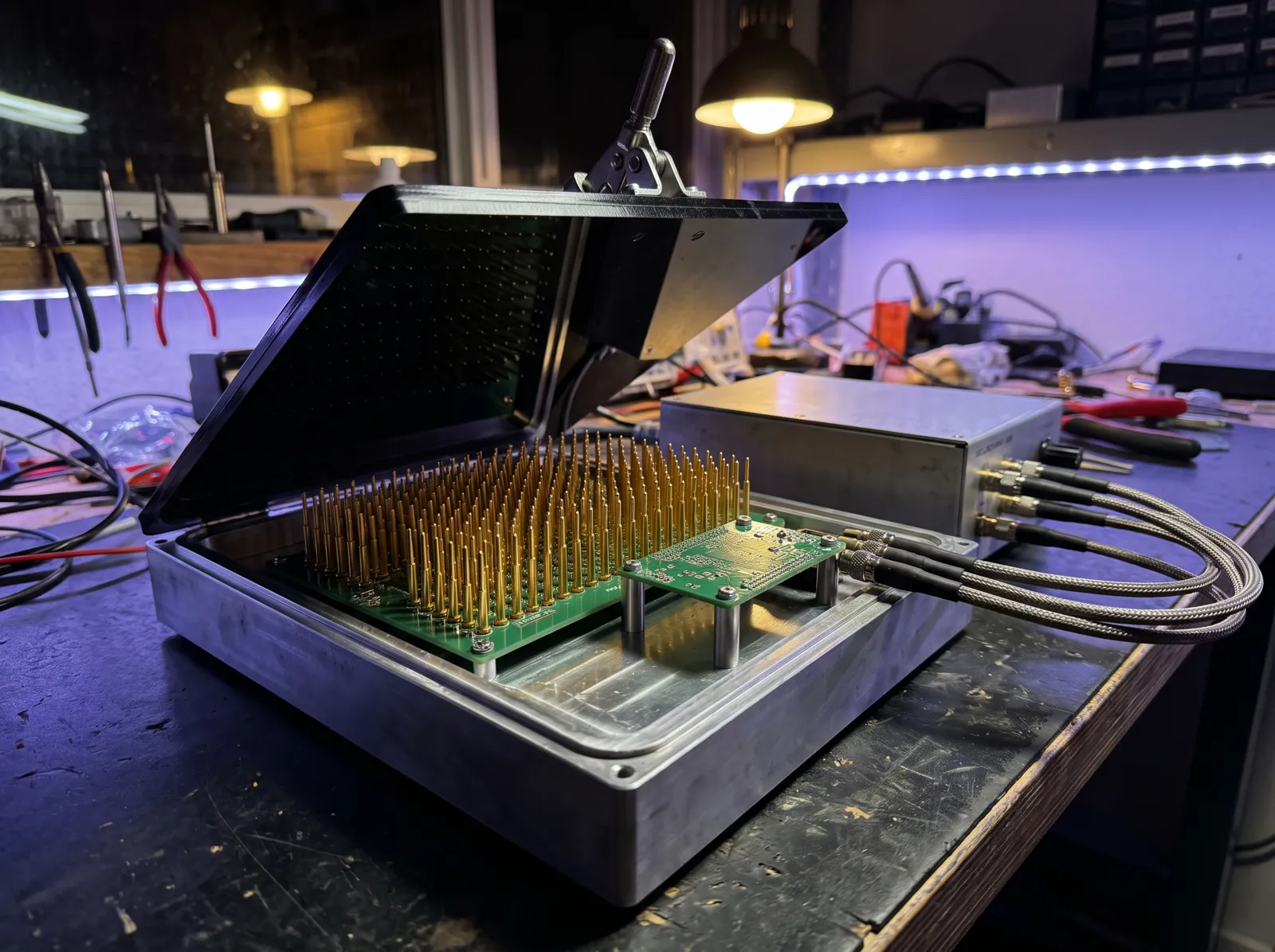
Every unit off the line goes through a production test we write with you:
 Illustration
 Illustration
A voice device hears everything in the room. It is designed so that only you can read what it sends.
It depends on what the receiver is. If the audio goes to a phone or earbuds, Bluetooth is the practical choice. If you control both ends and need uncompressed audio, longer range or two transmitters into one receiver, a proprietary 2.4 GHz digital link usually works better. We compare both at Gate 0 against your range, latency and battery targets.
Yes. As of October 2026 the Bluetooth SIG states that every Bluetooth product must complete the Bluetooth Qualification Process under the selling company's own membership, and that suppliers cannot qualify products on your behalf (bluetooth.com). Using a qualified design keeps the work smaller. We prepare the submission with you.
California requires the consent of all parties to record a confidential communication (Penal Code §632, as of October 2026). Our default is a visible recording light and a physical record or mute control. We do not design covert or hidden recording products. Your counsel decides how consent works in your markets.
No. Licensed wireless microphones operate as low power auxiliary stations under FCC Part 74, Subpart H, and unlicensed TV-band microphones fall under §15.236. Those are out of scope for us. We build in the 2.4 GHz band, with Bluetooth, Wi-Fi and proprietary digital links.
Yes. The wake word runs on the device, so audio leaves only after the wake word or a button press. If your model is small enough, some commands can run fully on the device. We size the SoC for that at Gate 0.
Often, yes. Our team has built a wireless recorder system and mic-array boards, and the voice-capture badge reference design has the mic, codec and power work done. Starting from proven boards can shorten Gate 1 and Gate 2. Your design and source files are still yours.
Next step. Tell us what your device needs to hear, where the audio goes and how many units you want for a first pilot. A Duobay engineer replies within 2 business days.
Tell us what the device must do. An engineer replies within 2 business days with questions, not a sales deck.